
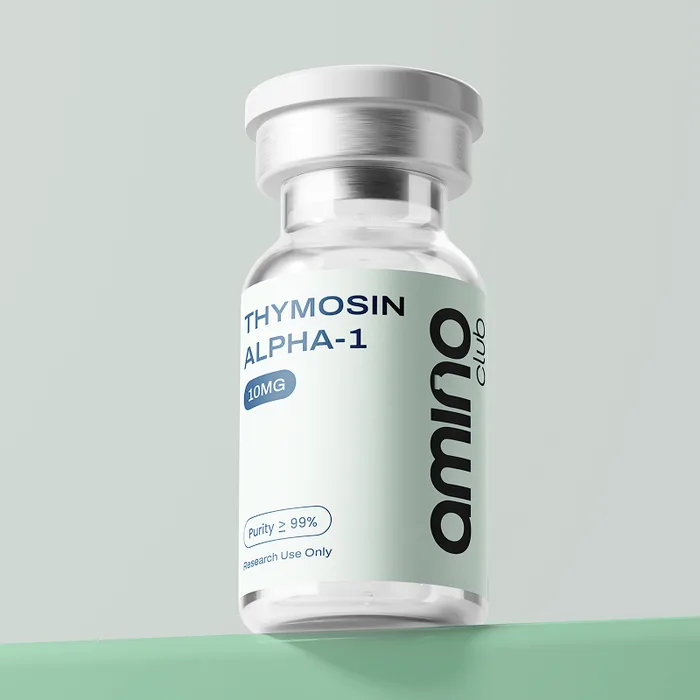
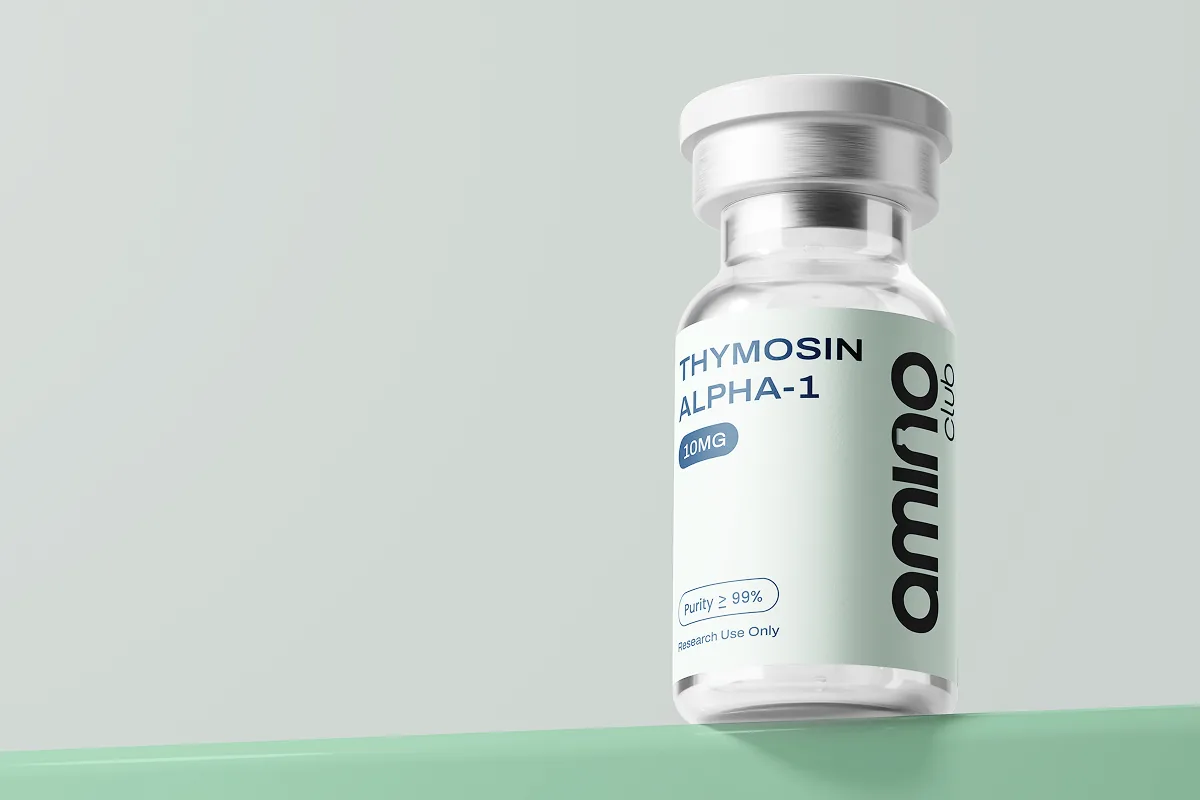
Thymosin Alpha-1
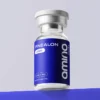
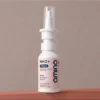
Price range: $90.00 through $150.00
28-amino-acid thymic peptide, a long-standing immunology research standard
Thymosin Alpha-1
Thymosin Alpha-1 is a synthetic peptide widely studied in immunology and cellular research. It is derived from a naturally occurring thymic peptide and has been investigated for its interactions with immune signaling, cellular responses, and biological pathways. Its research applications make it a useful compound for laboratories studying peptide biology, immune-related mechanisms, and molecular signaling.
For research use only. Not intended for human or veterinary use.
.
Thymosin Alpha-1: Research Overview, Properties & Applications
Thymosin Alpha-1 is a synthetic peptide that has attracted significant interest in laboratory research involving immunology, cellular signaling, and biological response mechanisms. As a peptide associated with thymic biology, it is commonly investigated to better understand how peptide molecules interact with immune-related pathways and cellular processes.
For researchers working with peptide compounds, understanding the background, characteristics, and research applications of Thymosin Alpha-1 can help support more informed laboratory studies.
What Is Thymosin Alpha-1?
Thymosin Alpha-1 is a synthetic peptide based on a naturally occurring peptide originally identified in thymic tissue. It consists of a short chain of amino acids and has been studied extensively in experimental research involving immune system signaling and cellular activity.
Rather than being considered simply another laboratory peptide, Thymosin Alpha-1 provides researchers with a model for examining peptide-mediated biological interactions. Research has explored its relationship with immune cell activity, signaling pathways, and mechanisms involved in biological responses.
Thymosin Alpha-1 and Immunology Research
One of the primary areas of interest surrounding Thymosin Alpha-1 research is immunology. Laboratory studies have examined how the peptide may interact with different components of the immune response.
Researchers may investigate its relationship with immune-cell signaling, cytokine-related pathways, antigen-presenting mechanisms, and other molecular processes. These studies can contribute to a broader understanding of how peptides influence communication between cells.
Because immune signaling involves multiple interconnected pathways, Thymosin Alpha-1 can also serve as a useful research compound for studying complex biological responses under controlled laboratory conditions.
Potential Research Applications
Thymosin Alpha-1 has been examined across several areas of experimental biological research. Common research interests include:
- Immune signaling and cellular communication
- Peptide and protein interactions
- Thymic biology
- Cellular response mechanisms
- Cytokine-related research
- Molecular pathway studies
- Experimental immunology
- Peptide characterization and analytical research
These applications make Thymosin Alpha-1 relevant to laboratories investigating how synthetic peptides interact with biological systems.
Molecular and Laboratory Research
Researchers studying Thymosin Alpha-1 may focus on its molecular characteristics, stability, purity, and interactions with experimental systems. Analytical techniques can be used to examine peptide identity and composition while supporting quality-control procedures.
Depending on the research objective, laboratories may evaluate peptide behavior using appropriate analytical methodologies. Documentation such as certificates of analysis, purity information, and batch-specific testing can be particularly valuable when selecting research-grade peptide materials.
Why Research-Grade Quality Matters
When purchasing Thymosin Alpha-1 for research, consistency and documentation are important considerations. Researchers generally need confidence that the material being studied matches the stated compound and specifications.
Important product information can include peptide identity, stated purity, batch information, analytical documentation, and storage recommendations. Reliable documentation helps researchers maintain consistent experimental conditions and improve reproducibility between studies.
Storage and Handling Considerations
Like other research peptides, Thymosin Alpha-1 should be handled according to the manufacturer’s specifications. Appropriate storage conditions can help preserve material quality and minimize unnecessary degradation.
Researchers should always review the product-specific documentation supplied with their material before laboratory use. Handling procedures may vary depending on the formulation, packaging, and intended analytical application.
Thymosin Alpha-1 for Laboratory Research
Thymosin Alpha-1 continues to be of interest in experimental peptide and immunology research because of its connection to immune-related biological pathways. Its well-defined peptide structure provides researchers with an opportunity to investigate molecular interactions and cellular signaling in controlled laboratory environments.
When selecting a research peptide, laboratories should prioritize clear specifications, appropriate analytical documentation, consistent quality, and responsible handling practices.
Thymosin Alpha-1 is supplied for laboratory research purposes only and is not intended for human or veterinary use.
Related products
Sexual Health
Longevity
Metabolic
Metabolic
Sexual Health
Growth & Recovery
Growth & Recovery
Metabolic