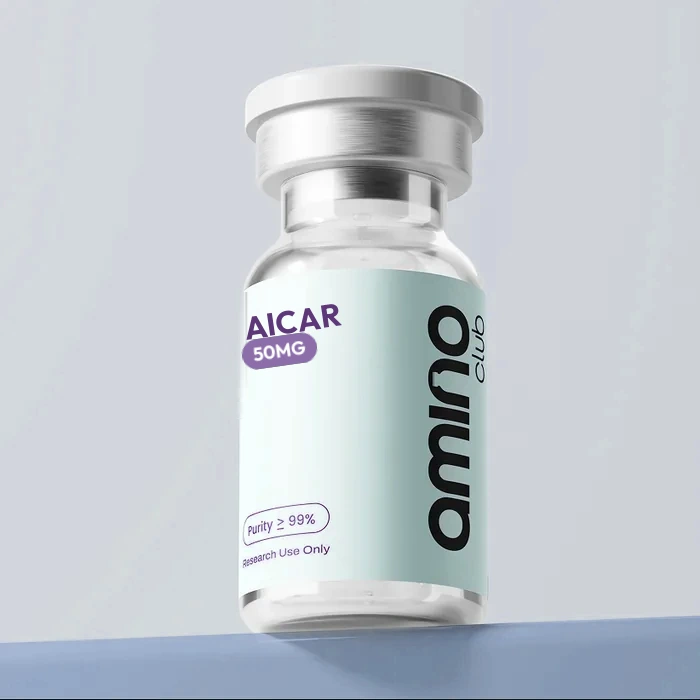
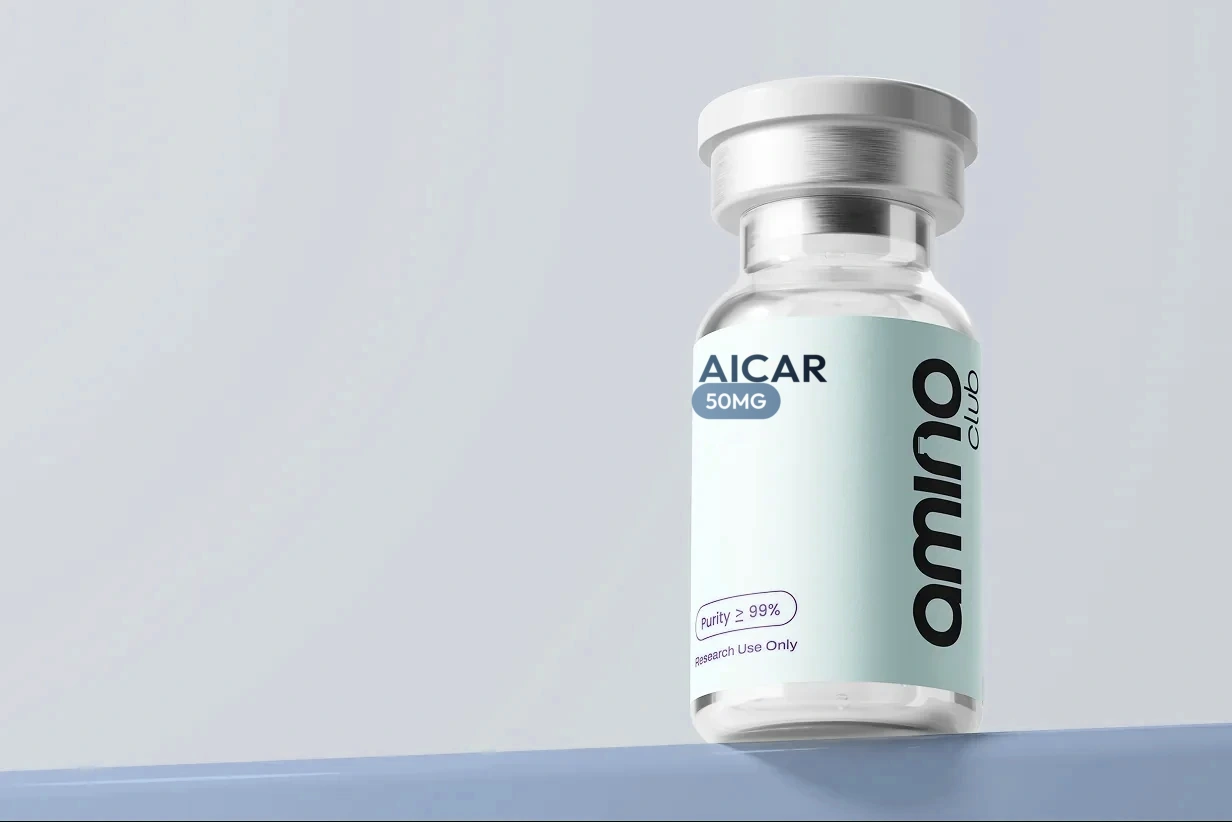
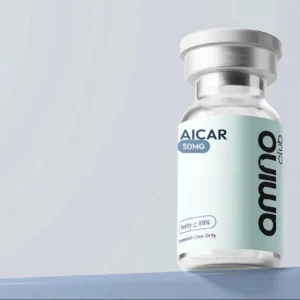
AICAR

Price range: $38.00 through $68.00
AMPK activator supplied as lyophilised powder for cellular energy metabolism research.
AICAR (5-Aminoimidazole-4-Carboxamide Ribonucleotide) is an investigational research compound widely studied in cellular metabolism, AMP-activated protein kinase (AMPK) signaling, glucose metabolism, and energy regulation. AICAR is used as a laboratory tool for investigating metabolic pathways and cellular responses to changes in energy availability. For research use only and not intended as an approved medication or performance-enhancing product.
AICAR: An Informational Guide to Metabolic and AMPK Research
AICAR, short for 5-Aminoimidazole-4-Carboxamide Ribonucleotide, is an investigational research compound widely used in studies involving cellular metabolism and energy regulation. Scientists have shown particular interest in AICAR because of its relationship with AMP-activated protein kinase, commonly known as AMPK.
AMPK is an important cellular energy sensor that helps regulate metabolic processes when energy availability changes. Because of this connection, AICAR has become a useful experimental tool in research involving metabolism, glucose regulation, mitochondrial biology, and cellular energy signaling.
What Is AICAR?
AICAR is a synthetic compound related to naturally occurring cellular metabolites. In experimental systems, it can influence pathways associated with AMPK activity, making it useful for studying how cells respond to changes in energy availability.
Researchers use AICAR as a pharmacological research tool rather than simply studying it as a nutritional compound. Its ability to interact with metabolic signaling pathways has made it relevant to a broad range of laboratory investigations.
Understanding AMPK Signaling
AMP-activated protein kinase, or AMPK, is often described as an important regulator of cellular energy balance. It responds to changes in the energy state of cells and influences several metabolic processes.
When cellular energy availability changes, AMPK-related signaling can influence pathways involved in energy production and utilization. Researchers study this system to better understand how cells maintain metabolic balance.
AICAR provides an experimental method for investigating aspects of AMPK signaling under controlled laboratory conditions.
AICAR and Cellular Metabolism Research
One major area of AICAR research involves cellular metabolism. Scientists investigate how metabolic pathways respond when AMPK-related signaling is experimentally influenced.
Studies may examine glucose metabolism, fatty-acid metabolism, mitochondrial activity, and other cellular processes connected with energy regulation. These experiments can help researchers understand the complex relationship between cellular energy availability and metabolic signaling.
AICAR and Mitochondrial Research
Mitochondria are cellular structures responsible for producing much of the energy required by cells. Because AMPK signaling is closely connected to energy metabolism, AICAR has also been investigated in studies involving mitochondrial function.
Researchers may use AICAR in experimental models to examine changes in cellular energy pathways and mitochondrial-related processes. These studies contribute to the broader scientific understanding of cellular metabolism.
Why AICAR Is Used as a Research Tool
AICAR is particularly valuable because it provides researchers with a controllable experimental compound for studying AMPK-associated pathways.
Research involving AICAR can cover molecular biology, metabolic signaling, glucose research, mitochondrial biology, and cellular energy regulation. Its use allows scientists to investigate specific metabolic questions under controlled experimental conditions.
Importantly, laboratory findings should not automatically be interpreted as evidence of a clinical benefit in humans.
AICAR Product Quality and Analytical Testing
Quality control is important when working with investigational research compounds. Researchers evaluating AICAR should consider product identity, purity, batch information, analytical testing, and available certificates of analysis.
Reliable documentation helps researchers confirm the characteristics of the material being studied and supports traceability throughout laboratory projects.
Storage and Handling Considerations
AICAR should be stored and handled according to the manufacturer’s product-specific documentation. Environmental conditions such as temperature, moisture, light, and contamination may affect certain research compounds.
Researchers should review storage instructions before handling AICAR and maintain appropriate laboratory conditions to support material integrity and consistent experimental work.
AICAR for Research Applications
AICAR may be relevant to research involving AMPK signaling, cellular metabolism, glucose pathways, mitochondrial biology, energy regulation, and metabolic disease research.
Researchers should use peer-reviewed literature, validated analytical techniques, and appropriate experimental controls when studying AICAR. Results should be interpreted according to the specific research model and experimental conditions.
Important Research-Use Notice
AICAR is an investigational research compound and should not be represented as an approved medication, weight-loss treatment, or performance-enhancing product. Research materials should be handled by qualified personnel in appropriate laboratory environments and used only where permitted by applicable regulations and institutional requirements.
Final Thoughts
AICAR is an important research tool for investigating AMPK signaling, cellular energy metabolism, mitochondrial processes, and related metabolic pathways. Its ability to influence experimentally relevant energy-signaling mechanisms has made it valuable across several areas of molecular and metabolic research. Careful attention to product identity, purity, analytical documentation, storage, and laboratory handling is essential when working with AICAR.
Related products


Longevity


Metabolic


Sexual Health

Sexual Health





Growth & Recovery