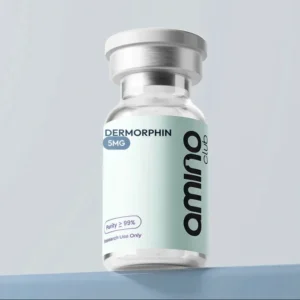
Dermorphin
$55.00
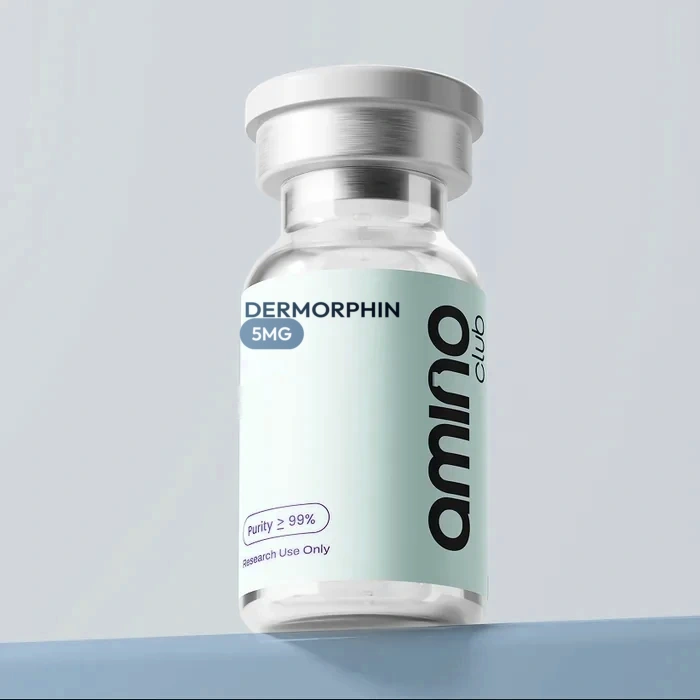
Heptapeptide opioid agonist first isolated from amphibian skin, for receptor binding research.Dermorphin is a naturally occurring opioid peptide originally identified in the skin secretions of certain South American tree frogs. It is primarily studied in laboratory research because of its high affinity for mu-opioid receptors, making it a notable compound for research into opioid receptor signaling, peptide pharmacology, and pain-related biological pathways.
Dermorphin: Exploring the Science of This Opioid Peptide
Dermorphin is a naturally occurring peptide that has attracted scientific interest because of its unusual interaction with opioid receptors. Originally identified in the skin secretions of certain South American tree frogs, dermorphin belongs to a class of bioactive peptides that can interact with specific receptors in biological systems.
Its strong affinity for the mu-opioid receptor has made dermorphin an important subject in research involving opioid receptor signaling, peptide structure, pharmacology, and pain-related biological pathways.
What Is Dermorphin?
Dermorphin is a short peptide consisting of seven amino acids. It was first identified in amphibian skin secretions and is notable for its distinctive molecular structure.
Unlike many naturally occurring opioid compounds, dermorphin is a peptide rather than a small-molecule opioid. Researchers became particularly interested in it because its molecular structure allows it to interact strongly with the mu-opioid receptor.
The study of dermorphin has contributed to broader scientific understanding of how peptide structures can influence receptor binding and biological activity.
Dermorphin and Mu-Opioid Receptors
The primary focus of dermorphin research is its interaction with the mu-opioid receptor, commonly abbreviated as MOR.
Mu-opioid receptors are part of the opioid receptor family and are found throughout the nervous system and other tissues. Their activation is associated with several physiological processes, including pain signaling and neuronal activity.
Dermorphin has demonstrated high affinity for these receptors in experimental research, making it a useful compound for studying receptor-ligand interactions.
Dermorphin and Pain Research
Because of its activity at mu-opioid receptors, dermorphin has been investigated in experimental models involving pain signaling and analgesic mechanisms.
Researchers use opioid receptor ligands to better understand how signals related to pain are transmitted and modified within the nervous system. Dermorphin’s distinctive receptor activity makes it particularly interesting for investigating the molecular mechanisms behind opioid-mediated responses.
However, experimental findings involving dermorphin should not automatically be interpreted as evidence of a safe or established medical application.
The Unique Structure of Dermorphin
One feature that makes dermorphin particularly interesting is its molecular structure. It contains a distinctive amino acid sequence that contributes to its interaction with opioid receptors.
Studying this structure can help researchers understand how changes in peptide composition influence receptor selectivity, binding affinity, stability, and biological activity.
This makes dermorphin relevant not only to opioid research but also to broader peptide chemistry and molecular pharmacology.
Why Is Dermorphin Being Studied?
Dermorphin is primarily studied because of its strong interaction with mu-opioid receptors and its unusual biological origin.
Research areas include:
- Mu-opioid receptor signaling
- Peptide pharmacology
- Opioid receptor binding
- Pain signaling research
- Neuropharmacology
- Peptide structure and activity
- Receptor-ligand interactions
- Amphibian-derived bioactive peptides
These areas help researchers investigate the complex relationship between peptide structure and receptor-mediated biological activity.
Dermorphin Research Applications
In laboratory research, dermorphin may be used as a model compound for investigating opioid receptor mechanisms. Researchers can examine characteristics such as molecular identity, purity, receptor affinity, stability, and biological activity.
Analytical testing is particularly important when working with research peptides because structural integrity and purity can influence experimental results.
Dermorphin research should be conducted using appropriate laboratory protocols and controlled experimental conditions.
Important Research Notice
Dermorphin is a potent opioid peptide and is intended for scientific research rather than general consumer use. It should not be represented as a product intended to diagnose, treat, cure, or prevent disease.
Because of its activity at opioid receptors, research involving dermorphin requires appropriate safety procedures and specialized laboratory handling. Experimental results should also be interpreted within the limitations of the specific research model.
Conclusion
Dermorphin is a distinctive bioactive peptide that continues to attract interest in molecular pharmacology and opioid receptor research. Its naturally occurring origin, unique structure, and strong affinity for mu-opioid receptors make it a valuable subject for studying peptide-receptor interactions and opioid signaling.
Continued research into dermorphin may provide further insight into receptor pharmacology, peptide structure, and the complex biological mechanisms underlying opioid-mediated signaling.
Related products
Longevity
Longevity
Growth & Recovery

Metabolic